
Choosing One Cake for Two Birthdays: A Celebration That Feels Fair, Personal and Memorable
One table, two stories
A shared birthday cake can be a lovely symbol of friendship or family life. It brings everyone together, simplifies the celebration and often creates a brilliant centrepiece for the table. Yet there is one important challenge: neither person should feel like a guest at someone else’s party.
Start by thinking about the two personalities rather than searching for a perfectly symmetrical design. Perhaps one child loves football while the other prefers space. Maybe a mother and daughter share a birthday but have completely different tastes. The goal is not to hide these differences. It is to make them part of the story.
A popular Manchester solution is a split design, with each half carrying its own colours and decorations. Another option is to choose one connecting idea. Football and space, for example, could meet in a playful “shooting for the stars” theme.
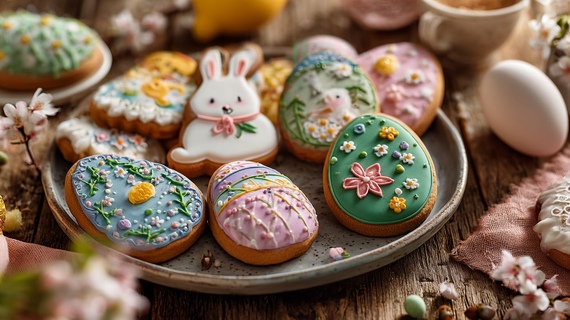
Small matching treats can also give each celebrant something personal. A pair of birthday gingerbread in Manchester designs, decorated with separate names or favourite symbols, can sit beside the main dessert. Each person then receives an individual keepsake without dividing the entire table.
Begin with a friendly conversation
Before deciding on flavours or icing, ask both birthday people a few simple questions. This works particularly well with children, who may struggle to describe a complete design but can easily name a favourite colour, animal or hobby.
Discuss:
- Their preferred flavours, colours and characters
- Any allergies, dietary requirements or strong dislikes
- Whether they want equal halves or one shared scene
- The correct spelling of both names and their ages
- Which details matter most to each person
This short conversation prevents one voice from dominating. It also gives the maker useful material for a design that feels thoughtful rather than crowded.
Finding harmony without forcing a match
Two themes do not need to be identical, but they should look comfortable together. Colour is often the easiest bridge. Navy can connect a superhero idea with a night-sky scene, while soft green may unite gardening and woodland animals.
The same principle appears in international celebration trends. Bakers increasingly use coordinated palettes and personalised details instead of covering a dessert with many unrelated objects. The result photographs beautifully and still leaves room for individuality.
In England, where birthday gatherings often take place at home, in village halls or at family-friendly pubs, practical details matter too. A tall, delicate creation may look wonderful online but become stressful during a drive across Greater Manchester. A lower, stable design can be just as impressive and much easier to serve.
Let small details carry the personality
Personalisation does not always require elaborate figures. Initials, favourite flowers, shirt colours, hobbies or short messages can communicate plenty. Two differently decorated name plaques may be enough to make a shared design feel balanced.
If the main dessert has limited space, personalized gingerbread treats in Manchester can continue each theme around the table. One set might feature guitars and musical notes, while another shows books and tiny teacups. Because the biscuits share the same palette, the whole display still feels connected.
Choose flavours everyone can enjoy
Flavour decisions can be more difficult than decoration. One person may dream of chocolate fudge while the other wants lemon and raspberry. Fortunately, sharing one centrepiece does not mean accepting one filling.
A skilled maker may suggest separate tiers, divided layers or a neutral sponge with two complementary fillings. Cupcakes or biscuits can provide an alternative if the requested flavours would clash.
Useful approaches include:
- Use different flavours in separate tiers for a larger gathering
- Pair a familiar sponge with two contrasting fillings
- Keep strong flavours, such as coffee or salted caramel, in one section
- Add labelled portions for guests with dietary restrictions
- Request a tasting box when the final choice feels uncertain
For a children’s party, familiar combinations usually work best. Adults may enjoy bolder pairings, although accessibility still matters when grandparents, colleagues or younger relatives are attending.
Make fairness visible
People notice balance quickly. If one side has a detailed model and the other has only a name, the design may feel uneven even when both sections occupy equal space. Fairness is about visual attention, not simply measurement.
Give each person one major feature, one name element and a comparable amount of decoration. Their sections can remain different while carrying equal emotional weight. For twins, consider separate candles so both can make a wish. For adults, two small messages can replace a single generic greeting.
Photos deserve some planning as well. Position both names towards the front or choose a rotating design with a clear view for each celebrant. At a busy family party in Manchester, this saves everyone from turning the cake repeatedly while phones and plates compete for table space.
Think about serving before ordering
Guest numbers influence every choice. A beautiful two-tier design may be unnecessary for ten people, while a modest round sponge will disappear quickly at a hall filled with classmates and relatives.
Tell the maker how many adults and children will attend, whether another dessert is being served and if portions need to be individually boxed. Mention collection times and travelling distance too. British weather is unpredictable, but warm cars and sudden rain are especially unhelpful when transporting delicate icing.
One celebration can still feel deeply personal
The finest shared designs do not erase individuality. They show how two different people belong in the same joyful moment. That might mean two themes meeting in the middle, a shared hobby interpreted in separate ways or a calm design built around both favourite colours.
Ordering bespoke birthday cakes in Manchester gives families the freedom to balance appearance, flavour and practical needs. More importantly, it allows both celebrants to recognise themselves in the finished piece.
A double birthday is not a compromise. With thoughtful planning, it becomes a richer story: two wishes, two personalities and one table filled with people who are delighted to celebrate them together.