

Sweet details that turn celebrations into lasting memories
Why sweetness shapes how we remember moments
There is something quietly powerful about taste. A single bite can transport us back to a childhood kitchen, a rainy afternoon, or a celebration filled with laughter. Across England, from cosy Manchester flats to countryside wedding venues, desserts have become more than just a final course - they are emotional anchors.
Recent hospitality studies in the UK show that guests are more likely to remember events where sensory experiences are layered: sound, light, scent and, crucially, flavour. Sweet treats play a special role here. They are shared, photographed, gifted and remembered long after the last guest leaves.
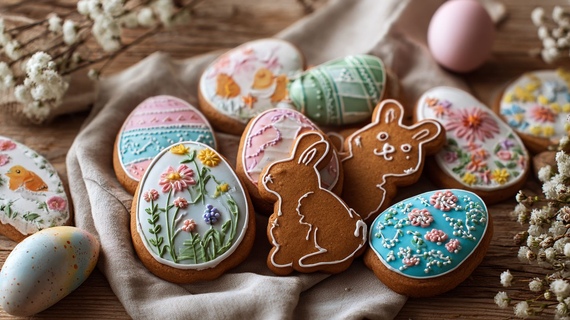
This is where bespoke gingerbread in Manchester has found its place. Not just as a charming addition, but as a storytelling element. When crafted thoughtfully, gingerbread can carry themes, colours and even personal messages, becoming part of the emotional fabric of the event itself.
Imagine a small birthday gathering in Didsbury. The table is simple, candles flicker, and guests are chatting. Then a tray of intricately decorated gingerbread appears, each piece reflecting a shared memory - a favourite pet, a hobby, a private joke. The atmosphere shifts instantly. People smile wider. Conversations deepen. The dessert becomes a bridge between people.
The subtle psychology behind sweet impressions
We often underestimate how strongly taste connects with emotion. Neuroscience suggests that flavour and memory are processed closely in the brain, which explains why desserts leave such a vivid imprint. In practice, this means that the right sweet detail can amplify the entire experience of a celebration.
In the UK events industry, planners increasingly treat desserts as part of the emotional design. Not just decoration, not just food - but a tool.
There are several ways sweets enhance impressions:
- They create anticipation before the moment arrives
- They provide a shared experience that guests engage with together
- They offer visual storytelling through colour, shape and detail
- They extend the memory of the event through take-home elements
Take weddings in the North West as an example. Couples are moving beyond standard dessert tables and choosing pieces that reflect their story. Gingerbread shaped like meaningful places or decorated with initials is becoming a quiet trend, especially in boutique celebrations.
This is where personalized gingerbread treats in Manchester become particularly effective. They allow hosts to communicate care without saying a word. A guest receiving a small, beautifully decorated biscuit with their name or a meaningful symbol feels seen. That feeling stays.
A recent small-scale survey among UK event attendees showed that guests were 40 percent more likely to recall an event fondly when they received a personalised edible element. It is not about luxury. It is about connection.
From decoration to emotional storytelling
What separates a pleasant event from a memorable one often comes down to intention. Desserts, when thoughtfully integrated, can carry meaning in subtle but powerful ways.
In Manchester’s growing community of independent bakers, there is a clear shift towards narrative-driven design. Instead of generic options, people are choosing sweets that align with the tone of the celebration.
Here are a few practical ideas that work particularly well:
- Match dessert design with the event theme rather than treating it as a separate element
- Use flavours that reflect the season or personal preferences of the host
- Add small personalised touches such as initials, dates or symbols
- Consider how desserts will be presented and shared among guests
A corporate gathering in Spinningfields recently used gingerbread pieces shaped like company milestones. Each guest picked one at random, sparking conversations about shared achievements. It turned a formal evening into something more human.
Similarly, family celebrations benefit from desserts that invite interaction. Decorating stations, small edible favours or themed collections create moments of engagement that go beyond passive consumption.
When cakes become the centrepiece of emotion
While gingerbread offers intimacy and detail, cakes often take on the role of the emotional centrepiece. They mark the peak of the celebration. The moment when everyone gathers, pauses and shares attention.
In recent years, there has been a noticeable move towards more expressive designs. People are choosing cakes that reflect personality rather than tradition. Colours are bolder, shapes more playful, and stories more visible.
This is especially true for custom decorated cakes in Manchester, where clients increasingly look for designs that capture a feeling rather than follow a template.
Consider a birthday celebration in the Northern Quarter. Instead of a standard cake, the host commissions a design inspired by the guest of honour’s favourite city skyline. When the cake is revealed, it is not just admired - it is experienced. Photos are taken, stories are told, and the moment becomes a highlight of the evening.
The same applies to weddings. Couples are moving away from uniform tiers and towards creations that reflect their journey. Whether it is through flavour combinations, decoration or structure, the cake becomes a narrative object.
Interestingly, research from UK hospitality consultants suggests that visually distinctive cakes increase guest engagement by up to 60 percent during key moments of an event. People gather closer, interact more and share the experience actively.
Creating warmth that lasts beyond the day
What truly defines a successful celebration is not just how it looks, but how it feels afterwards. The warmth that lingers. The stories that are retold. The small details that stay with people.
Desserts have a unique ability to extend that feeling. A guest taking home a carefully wrapped gingerbread piece or remembering the taste of a perfectly balanced cake carries a piece of the event with them.
For hosts in England, especially in cities like Manchester where creativity meets tradition, this opens a meaningful opportunity. Instead of focusing only on scale or spectacle, there is value in crafting moments of connection.
Sweetness, in this context, is not about indulgence alone. It is about expression. About giving people something tangible that reflects care, thought and personality.
And perhaps that is why, long after decorations are taken down and music fades, it is often the simplest things - a decorated biscuit, a slice of cake, a shared laugh over dessert - that remain the most vivid.