

Sweet plot twists: edible surprises that turn small parties into big memories
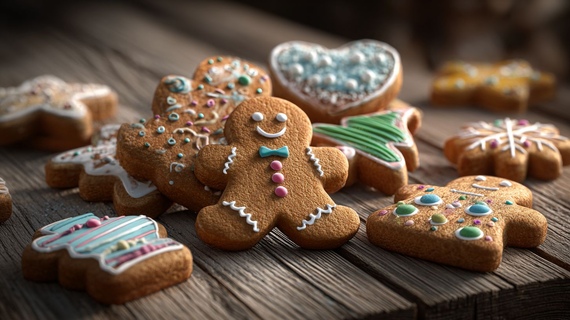
Planning a surprise party in England today often looks very different from the huge hotel banquets of the past. Friends gather in a flat in Ancoats or a semi in Didsbury, fairy lights go up, playlists are shared in a group chat, and there is always that one moment everyone is waiting for - the reveal. Sweet details are no longer just dessert at the end. They have become the way to tell the story of the evening, to hide clues, and to turn a simple get together into something people talk about for months. For many hosts, especially around Manchester, unique gingerbread cookies in Manchester are becoming a quiet secret weapon for this kind of celebration.
Instead of balloons shouting the theme from the moment the guest of honour walks in, edible details allow you to build a plot step by step. A biscuit on a side plate might look innocent until someone notices that each one carries a tiny hint about the surprise. A small cake in the kitchen may seem modest until it is cut and reveals colours, text or even a hidden layer that explains what everyone has really gathered for. This slightly more subtle approach fits how many British guests like to celebrate now - relaxed, playful and with a sense of humour rather than a big dramatic gesture.
Across England, more people are celebrating at home or in small hired spaces. Research by event platforms and hospitality groups has repeatedly shown that guests remember moments that feel personal and sensory, not just the number of decorations in the room. Edible touches sit perfectly in that space. They engage sight, smell and taste. They connect with culture and memory - a spiced biscuit that reminds someone of childhood Christmas, or a cake flavour chosen because it matches a couple’s first date.
Why edible details make a surprise feel personal
Psychologists who study memory and experience often talk about “peak moments” - short periods during an event when feelings are at their strongest. Those peaks tend to be linked to something unexpected and meaningful. A carefully designed biscuit or cake can do that job beautifully, because it does not just sit on the table. It carries a message, a joke, or a reference that only your group understands.
Imagine a colleague’s leaving do in a Northern Quarter studio. At first, the team appears to be having a standard after work drink. On the table, there is a plate of spiced biscuits shaped like tiny laptops, headsets and coffee cups. At a glance, they just look cute. Then someone spots tiny hand painted words on the icing - a favourite office catchphrase, a running joke about the printer, a phrase from their email sign off. In that moment, the friend realises how much care went into the evening. The food has turned into a memory board.
International examples support this idea. In countries where home parties are common, hosts often use edible details to tell a story rather than rely on large decor. Scandinavian hosts, for instance, have long used biscuits and cakes to reference family traditions and inside jokes. British hosts are now doing something similar, but with a local twist. Gingerbread shaped like Manchester bees, cakes coloured in football team shades, or iced references to favourite local bands make the surprise feel rooted in the city rather than copied from a Pinterest board.
Turning biscuits into secret clues
One of the most playful ways to use gingerbread at a surprise event is to treat each piece as a clue in a story. Instead of placing all the answers in one place, you let guests discover them gradually as they help themselves to snacks.
Here are a few ideas that work particularly well for small English homes and flats.
- Spell out a hidden message by using letter shaped biscuits and placing them around the room for guests to spot.
- Use different biscuit shapes to represent stages of the surprise - for example, little planes for a travel themed reveal or tiny houses for a “new home” party.
- Paint tiny symbols in the icing that only the guest of honour will understand and let them “decode” the meaning as the evening goes on.
- Create a tasting trail where each biscuit flavour hints at what is coming next, such as lemon before a sunny holiday announcement or coffee before a promotion reveal.
- Place one slightly unusual biscuit among a plate of simple ones and build a game around who notices the odd detail first.
You can even frame the whole evening as a relaxed Gingerbread Decorating Workshop that suddenly turns into a surprise announcement. Friends arrive thinking they are simply icing biscuits together, which is already a cosy way to spend an evening in Manchester or nearby towns. Halfway through, someone brings out extra shapes that spell out “We are engaged” or “We are moving south” or “You are our new manager”, and the workshop turns into the big reveal moment. Guests feel involved rather than just watching from the sofa.
Cakes as the grand reveal
While biscuits work wonderfully for small clues, cakes often carry the final headline of the story. In a British context, the cutting of the cake is already a tradition for weddings and milestone birthdays. Using that moment for a surprise feels natural rather than staged. The key is to think beyond simple text on top and consider depth, layers and hidden elements.
Picture a modest looking sponge at a surprise promotion party. On the outside, it is frosted in a clean, minimal style that would not raise suspicion if the guest of honour sees it early. Inside, though, the colours match the logo of their new department, and the centre slice reveals a hidden message baked into fondant letters. When the knife goes in and the first slice falls away, the room gets its “wow” moment without needing fireworks or confetti cannons.
Planning the big reveal without giving the game away
Surprise events can easily go wrong if the plan is too complicated or the guest of honour arrives too early. Edible details give you a flexible tool, but they still need a little structure around them.
Timing, communication and quiet logistics
To make gingerbread and cakes really work for a surprise, it helps to think about them like part of the running order, not just dessert. A few practical steps keep things smooth.
- Decide at which exact moment each edible element appears, and agree a simple cue with your helpers.
- Keep packaging neutral, so deliveries arriving to a Manchester terrace or flat do not give away the theme before you are ready.
- Ask one trusted guest to act as “plate manager”, quietly bringing out the right biscuits and hiding others until their time.
- If the cake holds the main reveal, make sure there is a natural reason to gather everyone around it, such as a toast or a short speech.
- Plan for leftovers by providing small boxes, so guests can take a piece home and the memory travels with them.
In the Manchester area, many independent bakers now offer designs that fit these ideas perfectly. You can commission personalised cakes in Manchester that look intentionally understated from the outside but hide colours, patterns or text that only appear when sliced. Paired with smaller themed biscuits, this creates a rhythm for the night - hint, hint, hint, then reveal. It works just as well in a rented function room in the city centre as it does in a small kitchen in Chorlton.
Local culture also plays a role. People in the North of England tend to value warmth, humour and authenticity in their celebrations. A cake that nods to a favourite local pub, a gingerbread set shaped like tram stops, or icing in the colours of a beloved club feels real and grounded. Guests leave not just with full plates but with the feeling that the host really thought about who they are.
Making surprise edibles part of your own party tradition
Once you have tried using gingerbread and cakes as part of a surprise, it is hard to go back to plain sponge and shop bought biscuits. The good news is that you do not need a huge budget or a professional event planner to make it work. You simply need a clear story, a conversation with a skilled maker, and a bit of imagination.
To get started, many Manchester hosts find it useful to follow a simple checklist.
- Choose the story of your surprise first - promotion, new baby, new home, or simply “you matter to us”.
- Decide which parts of that story you want to show through biscuits and which through cake.
- Talk to a local maker about flavours and designs that reflect your friend’s tastes rather than current social media trends.
- Keep decorations in the room fairly neutral, so the edible elements do the storytelling.
- After the event, collect photos of the biscuits and cake and save them alongside other mementos, so the memory stays vivid.
Over time, this approach can become part of your group’s culture. Friends will start to look forward to what the biscuits will “say” this time, or what the cake might reveal. Children who grow up with these traditions may one day ask for similar surprises at their own milestones. The focus stays on thoughtfulness rather than scale, which suits modern English life where many people are juggling smaller spaces, busy schedules and tighter budgets.
In the end, using gingerbread and cakes in surprise parties is not just about pretty icing. It is about taking the time to translate your feelings into something your guests can literally taste. In a city like Manchester, where independent makers thrive and people value both humour and heart, that combination feels exactly right.