

Turning family photos into edible memories: why Manchester families are choosing cakes and gingerbread sets
Why families in Manchester love edible memories
Every family has that one photo that makes everyone smile at once. Maybe it is your toddler in a superhero costume on Deansgate, nan laughing at a Sunday roast in Stockport, or three generations squeezed together on a windy Blackpool pier. We print it, save it as a phone background, post it on social media - and then it quietly disappears into the digital noise.
Now imagine the same picture not on a screen but on the table at your next celebration. Instead of showing guests your phone, you place a box of hand painted biscuits or a cake where every slice carries part of that story. The room goes quiet for a second, and then you hear the first delighted "Is that really us?".
For many families in England, and especially around Greater Manchester, this kind of detail feels warmer and more human than a generic supermarket cake. You are not only serving dessert, you are sharing your history in a way that is playful and surprisingly moving. Children rush to find "their" biscuit, grandparents laugh at how accurately their glasses or favourite cardigan have been painted, and that ordinary picture suddenly becomes a ritual.
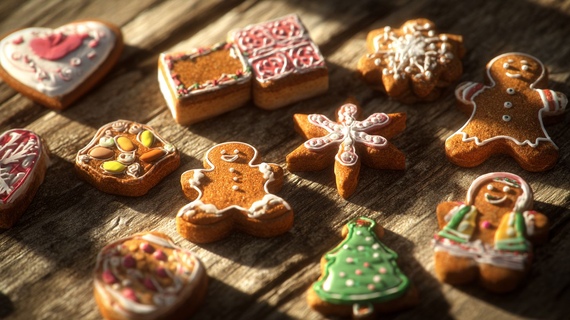
Local makers know this emotional side very well. When you order custom decorated gingerbread in Manchester, you are not only asking for neat edges and clean icing lines, you are asking someone to carefully study your photo, notice your family’s tiny habits and turn them into edible art. That attention creates a different level of connection between the baker and your story, and guests feel it even if they cannot quite explain why.
How to choose the right family photo for your design
Not every image from your phone gallery will work equally well on a cake or a gingerbread set. The good news is that you do not need any design background to choose a strong reference. A few simple rules will help the maker do their best work.
First, think about clarity. Faces that are very small or hidden behind sunglasses are harder to transfer into icing. Photos taken late at night in a dark bar might be lovely memories but become flat and muddy when translated into food colours. It is usually better to choose a picture with good daylight, clear outlines and simple clothing rather than lots of patterns fighting for attention.
Second, pay attention to the story in the frame. A photo where everyone stands stiffly in a row can still work, but pictures with a bit of movement or interaction often translate into livelier designs. A hug in the kitchen, the moment a child blows out candles, the family dog jumping into the shot at the last second - all these details can turn into charming visual jokes on biscuits or cake panels.
Simple rules that make your photo baker friendly
- Choose a picture where the main faces take up at least one third of the frame.
- Avoid very busy backgrounds full of strangers, traffic or shop signs that distract from your family.
- Make sure the image is not too dark or overly filtered, as this can distort skin tones when copied into icing.
- Look for recognisable details - a favourite mug, a specific hairstyle, a football scarf - that can be turned into small edible elements.
- If you are torn between several photos, send two or three and ask your maker which one will work best for the chosen format.
Many British families now treat this process a bit like crafting a memory box. They sit down together, scroll through the year and choose the images that feel most "them" at this moment. Quite often, parents will involve children in the decision, which makes the final reveal at the party even more special because the kids feel they were part of the creative process.
Once you have chosen a strong picture, the baker can think not only about copying it, but about breaking it into separate elements that suit a set. Instead of printing the whole frame on one big biscuit, they might suggest turning each person into a separate cookie, adding a biscuit with the family surname and a couple of small pieces with symbolic details. This is where your simple snapshot starts turning into personalized gingerbread treats that work as a little edible exhibition of your life together.
Thinking in sets, not single biscuits
Internationally, makers see that customers respond especially well to designs that tell a mini story across several items. In Scandinavia and Germany, for example, it is common to create long biscuit compositions where each tile shows a different moment from the same day. Manchester families are slowly picking up this idea too.
Instead of placing one large biscuit with a printed photo into a box, you might have your wedding picture translated into a row of smaller cookies. One shows the couple, one the wedding venue, one the bouquet, another a favourite line from the speeches. The same approach works beautifully for birthdays, graduations or first day of school memories. When guests open the box, they instinctively pick up different pieces, ask questions and share stories, which is exactly what you want at a family gathering.
Small details that carry big meaning
The charm of handmade work lies in the details that machines would never notice. A slightly crooked fringe that everyone jokes about, grandad’s bright red socks, or the family cat hiding under the table can all be highlighted. Skilled decorators will often exaggerate those details just enough for them to be instantly recognisable without losing the overall elegance of the set.
From a psychological point of view, researchers in gift giving note that people remember not only that they received something tasty, but that the giver invested thought and time into interpreting a shared memory. Personalised photo based desserts tick both boxes - they are delicious and they show emotional effort.
From photo to dough in the studio
Behind the scenes, the process of turning your phone picture into biscuits or cake design follows several clear stages. First comes interpretation. The maker studies the reference image, sketches simplified outlines and decides which elements will be reproduced exactly and which will be suggested with colour, shape or texture.
Next comes planning the composition for the chosen format. A rectangular gingerbread set in a gift box has different rules from a round cake that will be cut in slices. The decorator thinks in advance about where the centre of attention should be, how to keep faces away from the places that will be cut first, and where to place text or dates so they remain visible for photos.
Colour matching is another important step. Skin tones, hair colour and favourite clothing shades are mixed using edible colours that behave differently from screens. Good makers will often ask whether a client prefers more realistic shades or a softer, pastel interpretation. Across Europe, a growing number of customers choose slightly stylised, illustration like portraits because they feel timeless and less dependent on trends in photo filters.
Finally, there is the practical side of drying times and transport. Biscuits need time for the icing to set properly so that fine details will not smudge on the way to your party. Cakes with hand painted panels or edible prints must be scheduled carefully so that the decoration looks fresh on the day but still has time to stabilise. This is why it makes sense to contact your maker well in advance, especially for bank holiday weekends and December dates.
Bringing the same idea onto a celebration cake
At some point families realise that the photo they love could also become the entire concept for their main celebration cake. A lot of people in Greater Manchester now choose bespoke cakes in Manchester when they want a single, dramatic centrepiece that still feels deeply personal. Instead of a generic "Happy Birthday" with balloons, the cake becomes a canvas for a favourite family snapshot.
One popular approach is to place an edible print or hand painted portrait on the top tier and support it with smaller visual references around the sides - places you have travelled together, hobbies, pets or important dates. Another idea is to interpret the photo more loosely. For example, if your favourite picture is from a picnic in Heaton Park, the cake might show the park’s trees, a blanket pattern and tiny biscuit versions of your picnic snacks, with the family only hinted at in silhouettes.
Questions to discuss with your maker before you order
- Tell the baker what you love most about the photo - the expressions, the location, the colours or something else.
- Be honest about how many guests you need to serve so the size and structure of the cake match the event.
- Ask whether the design will be painted by hand, created using edible print or combined with shaped biscuits on top.
- Discuss flavour options early, especially if you want lighter creams for children or specific traditional tastes for older relatives.
- Clarify how the cake should be stored before the party and how long the decorations will keep their look if you plan to photograph them extensively.
In the UK, and particularly in cities with strong local identities like Manchester, people value the chance to support small creative businesses while celebrating their own stories. Ordering a cake or biscuit set based on a family photo links those two trends - you add something unique to your gathering and at the same time invest in a craftsperson who lives and works in your area.
When a dessert becomes a family tradition
After the first experiment goes well, many households find that "edible memories" quietly become part of their family culture. One year you turn a chaotic Christmas morning photo into a gingerbread set, the next you celebrate a graduation with a cake that secretly hides your child’s favourite childhood picture in the design. Soon relatives start asking months ahead what this year’s image will be.
From a maker’s perspective, these ongoing projects are especially rewarding. Over time they get to know your family, recognise familiar faces and see how children grow. For you, the customer, it becomes more than a transaction. It is a long term conversation with someone who helps you mark your milestones in sugar and spice. That combination of emotional depth, craft skill and local connection is exactly why turning a family photo into the design for a cake or gingerbread set feels so satisfying for modern British families.