

Why gingerbread became Britain’s shortcut to comfort and celebration
The scent that writes a season
Open the kitchen door on a chilly English afternoon and the first thing that greets you is warmth - not just from the oven, but from the swirl of ginger, cinnamon and honey in the air. That scent carries memories. For many families in England, gingerbread means winter markets, childhood biscuits, shared mugs of tea, last-minute ribbons and the joyful rustle of tissue paper. It is food as a feeling. And feelings, unlike fashions, don’t go out of date.
Gingerbread’s story stretches from medieval spice routes to today’s neighbourhood baker. Spices once signalled welcome and prosperity; hosts offered them to mark feast days, fairs and weddings. Over centuries, the recipe softened, shapes multiplied and icing turned biscuits into little canvases. Modern makers kept the ritual alive - mixing by hand, cutting with care, finishing each piece like a tiny keepsake. In Manchester and across the North West, this craft sits at the crossroads of tradition and trend: nostalgic enough to comfort, flexible enough to suit any party brief, endlessly photogenic for social feeds.
Why gingerbread reads as cosy, not just tasty
Familiar flavours, gentle heat
Ginger warms without overwhelming. The spice opens slowly, then hands the stage to buttery biscuit and floral honey. That balance is why gingerbread travels well from tea plate to gift box and back again. It suits children and grandparents, neighbours and colleagues. It is a meeting point.
Stories you can hold
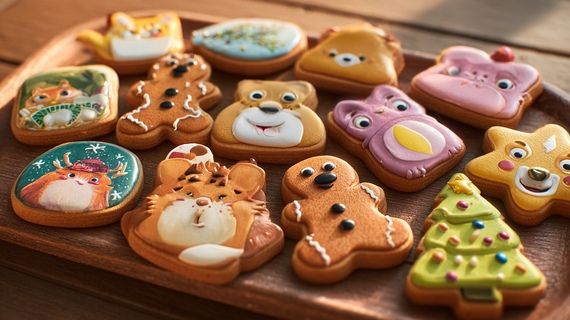
A biscuit can be a house, a snowflake, a football shirt, a baby’s pram, even a skyline. Shapes carry meaning, and meaning multiplies sentiment. When the design mirrors a moment - a first day at school, a match day, a holiday reunion - the biscuit becomes a keepsake before it is eaten.
Craft you can see
Icing lines, hand-painted details and delicate embossing signal time invested. People recognise care at a glance. In a world of quick clicks and next-day deliveries, visible craft slows the pulse. It invites a pause - and a photo.
Shareable by design
Gingerbread is naturally social. A single batch becomes a plate for the office, a box for the neighbours, place cards at the table, favours for guests. It slides into gatherings without fuss and leaves only crumbs and smiles behind.
The Manchester twist - local roots, modern briefs
Walk through the winter lights in Albert Square and you’ll catch that unmistakable aroma from stalls and bakeries. Families plan December weekends around a warm cone of roasted nuts and a bag of spiced biscuits. Independent makers turn local scenes into iced illustrations; football colours find their way onto shirt-shaped treats; canal boats and brick mills become charming motifs. In studios across Greater Manchester, small teams mix, roll and bake to order, keeping batches small so flavour stays bright and texture stays crisp.
Local clients bring practical challenges - weatherproof packaging for outdoor markets, vegan or dairy-free sets for mixed groups, sturdy postal boxes for care parcels to students. Makers answer with smart tweaks: a touch more citrus for freshness, hand-cut templates for clean edges, food-safe printing for intricate logos. The result is consistent - biscuits that look like a celebration and taste like home.
When comfort meets commissioning
Gingerbread’s big advantage is elasticity. It adapts to theme, palette and occasion without losing its soul. That’s why more businesses are using biscuits to humanise formal moments - welcome boxes for new hires, thank-you gifts for clients, team anniversaries, charity launches. The tone lands as thoughtful rather than flashy, seasonal rather than salesy.
handmade gingerbread in Manchester speaks directly to that need. It blends artisan technique with local pride, short supply chains with personal service. You can brief a design in the morning and talk to the person who will pipe the final line in the afternoon. That closeness turns projects into collaborations - and results into talking points.
Practical tips for ordering biscuits that feel like a hug
- Start with the moment, not the motif. Is this about comfort after a long week, a welcome to a new colleague, a child’s birthday or a winter reunion
- Pick flavours that echo the season - classic spice for winter, lemon-zest glaze for spring, honey-forward dough for autumn markets.
- Keep palettes simple. Two or three colours make hand-piped details sing and photograph beautifully.
- Plan quantities around sharing. A few larger centrepieces plus many small biscuits encourage passing plates and easy conversations.
- Ask about packaging early. Window boxes and recyclable wraps protect icing and keep textures perfect on arrival.
Why holidays choose gingerbread - and why the feeling lasts all year
Rituals anchor memory
People remember processes - the rolling, the cutting, the icing. Families turn these into micro-rituals that travel from one home to another. Friends repeat them in shared houses, partners repeat them in first kitchens, grandparents teach them to new hands. Comfort embeds when repetition meets joy.
Research backs the feeling
Food psychology studies consistently link warm spices to perceived cosiness and positive anticipation. Cross-cultural research shows that scents tied to past celebrations can lift mood and increase patience. In simpler words - the smell of gingerbread encourages people to slow down, smile and stay.
International inspiration, local translation
From German Lebkuchen hearts to Scandinavian pepperkaker, many countries carry a ginger-spice tradition. What makes the English approach distinctive is its love of personal narrative. We write messages in icing, shape biscuits to match hobbies and weave local landmarks into sets. That tendency makes gingerbread an adaptable language for modern celebrations - a language anyone can read at a glance.
In the thick of winter planning, one theme dominates the inbox of any Manchester maker - workplace gatherings and family tables. Procurement teams look for something cheerful yet appropriate, HR needs inclusive treats, households want a centrepiece without stress. Here, gingerbread gifts solve several problems at once. They are portable, portion-friendly and naturally festive. They bridge the gap between professional and personal with grace.
A quick checklist for festive success
- Book earlier than you think - diaries fill fast from late October.
- Mix shapes for pace - stars and rounds for rhythm, one or two hero designs for photographs.
- Include name tags or tiny iced initials to lift the experience from tasty to memorable.
- Consider dietary options - gluten-free or vegan sets help everyone feel included.
- Add a keepsake - a hand-tied ribbon or printed story card about the design gives biscuits a second life after the last crumb.
From biscuit to cake - when the celebration grows
There’s a point where a gathering outgrows a plate of biscuits and asks for height, drama and a single slice that signals the moment. That’s where gingerbread’s aesthetic steps onto a tiered stage. Spice biscuits become plaques, borders and charming toppers, while soft sponge layers carry the flavour forward. Couples blend family traditions into one design using gingerbread motifs; companies commission statement bakes for milestones and launches; parents pick playful houses or tiny football boots for party tables.
For clients who love continuity, personalised cakes in Manchester extend the same values - local craft, seasonal flavour, careful detailing - into larger formats. The brief remains human: colours that match a scarf, a skyline that nods to a favourite walking route, a ribbon that echoes a team kit. Cakes travel to offices, community centres and living rooms with the same message as the biscuits that inspired them - you’re welcome here.
The quiet power of a spiced crumb
Gingerbread became a symbol of comfort and celebration because it carries history lightly. It feels familiar without feeling tired, humble without feeling plain. It can whisper in a teacup or sing on a market stall. In Manchester kitchens today, makers measure that history with spoons and scales, then translate it into designs that belong to this week, this team, this family. That’s why a biscuit can change a room - and why the season never really ends for those who bake it.
How to keep the feeling going after the party
- Save one biscuit from each special set and tuck it into a memory box as a tiny time capsule.
- Turn a favourite motif into a yearly tradition - the same house, the same scarf, the same skyline - and watch anticipation grow.
- Share the making - invite friends to pipe initials, let children add sprinkles, set a quiet playlist and give everyone a role.
- Pair with tea blends that echo the spice profile - chai for warmth, Earl Grey for lift, citrus infusions for brightness.
In the end, comfort is a practice. Gingerbread just happens to be a delicious way to keep practising it.