

Why your finished cake may weigh slightly more or less than ordered
Ordering a celebration cake often starts with a number: two kilograms for a family birthday, four kilograms for a wedding or perhaps something smaller for an afternoon gathering. It feels precise. Yet handmade baking is not an industrial process, and the final weight may differ slightly from the figure agreed at the start.
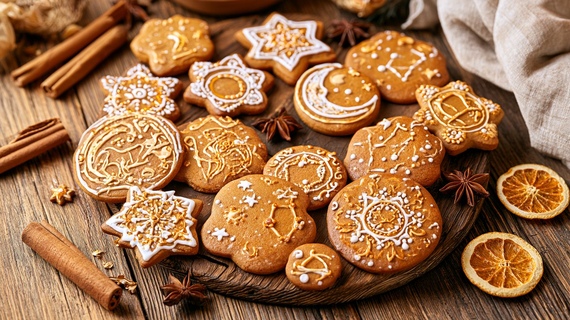
That small variation is normal. It usually reflects careful baking, generous decoration and the natural behaviour of fresh ingredients rather than a mistake. The same principle applies to handmade gingerbread in Manchester, where individually mixed dough, icing and decorative details can make each finished piece subtly different.
An ordered weight is a practical guide
When a baker calculates the required size, the main goal is to provide enough portions for every guest. Weight helps estimate the diameter, height, amount of filling and number of sponge layers. However, it cannot predict the final result down to the last gram.
Imagine a birthday celebration in Stockport for 20 people. A customer orders a three-kilogram cake, so the baker plans the recipe around that target. After assembly, the finished creation might weigh 3.1 kg because the sponge retained a little more moisture or the chosen design required extra buttercream.
In another case, a lighter fruit filling may bring the result slightly below the estimate. Both cakes can still provide the planned number of portions.
Fresh ingredients do not behave like factory components
Flour, eggs, cream, butter, fruit and honey naturally vary. Even when a baker follows the same recipe, several details can affect the result:
- Eggs may differ in size, berries can contain more juice, and sponge layers may retain different amounts of moisture.
- Cream can whip to a slightly different volume depending on temperature, while caramel and fruit compote may thicken differently during cooling.
- Cakes lose moisture in the oven and during chilling, but the exact amount changes with baking time, humidity and the size of each layer.
Professional bakers allow for these changes when planning an order. Recipes are tested and portions are calculated carefully, although fresh food cannot be treated like material cut by a machine.
Decoration adds beauty and weight
A simple buttercream finish weighs less than a cake covered with ganache, sugar flowers, chocolate spheres or handmade models. Even a seemingly small design change can add several hundred grams.
This is especially noticeable when a customer requests a detailed theme. A Manchester family planning a child’s party might ask for a football scarf, a fondant figure and edible lettering. Those elements were not placed on a scale when the initial portion estimate was discussed, yet they become part of the finished cake.
The same artistic variation appears in personalized gingerbread treats in Manchester. One biscuit may carry a thin piped name, while another has several layers of icing and decorative details. They belong to the same set but will not necessarily weigh exactly the same.
Structure can change the final figure
Tall and tiered cakes need internal support. Cake boards, dowels and separators keep the design stable during collection, travel and display. These items may be included in the weight shown on a household scale even though they are not edible.
A delicate summer cake collected during a warm afternoon may also require a firmer outer layer for safe transport. Across the UK and in bakeries abroad, stability is prioritised because a beautiful cake must survive the journey as well as look impressive on the table.
Why precision has sensible limits
Commercial food producers can control portions using automated equipment and highly standardised ingredients. Independent bakers work on a smaller scale, often decorating every order by hand. Their process is closer to tailoring than factory production.
A dressmaker can follow exact measurements, yet embroidery changes the weight of the finished dress. Cake decoration works in much the same way. The agreed figure guides the structure, but flavour, moisture and artistry shape the final result.
What matters more than a few grams
Guests rarely notice whether a cake weighs 2.9 or 3.1 kg. They remember the soft sponge, balanced filling, thoughtful design and moment when it arrives at the table. Portion planning is therefore more useful than chasing absolute precision.
Before confirming an order, customers can help the baker by sharing:
- The number of adults and children, plus whether the cake will be the main dessert or part of a larger buffet.
- The preferred portion size, flavour, filling and level of decoration.
- Any plans to save a tier, take slices home or serve the cake over two days.
- Collection details, travelling time and the conditions at the venue.
These details give the maker a clearer picture of what the celebration needs. For a relaxed afternoon tea, smaller servings may be suitable. At a wedding breakfast, generous dessert portions might be expected.
A little flexibility protects the design
Reducing a finished cake simply to reach an exact number on the scale could mean removing filling, trimming sponge or simplifying decoration. That would harm the result without adding value for the customer.
A slight increase often means there is an extra slice available, which is rarely unwelcome at a birthday or family gathering. A modest reduction may be equally reasonable if the planned serving count remains unchanged.
When ordering bespoke cakes in Manchester, it is helpful to treat the stated weight as an informed estimate. The baker should explain the expected tolerance, pricing approach and whether decorative supports are included. Clear communication prevents surprises and allows everyone to focus on the celebration.
Handmade means individually balanced
No two handmade cakes are completely identical, even when their designs appear similar. That individuality is part of their charm. A responsible maker still measures ingredients, follows tested recipes and checks the assembled cake, but also responds to what happens during baking.
Slight differences in finished weight are therefore not a sign of poor control. They are a natural feature of fresh, carefully constructed food. If the cake serves the promised number of guests, travels safely and tastes wonderful, the most important measurements have already been met.